In Nigeria, the conversation around infrastructure is often centered on durability and cost. But at our core, we believe the most important metric for any building is usability. For a “Gifted and Disabled” focused organization, a building is more than just brick and mortar—it is either a gateway or a wall.
Today, we’re pulling back the curtain on our design philosophy. We aren’t just building offices; we are engineering inclusion. From specialized ramps to sensory-friendly layouts, here is how we are breaking barriers in the Nigerian landscape.
1. More Than Just a Slope: The Science of Our Ramps
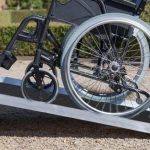
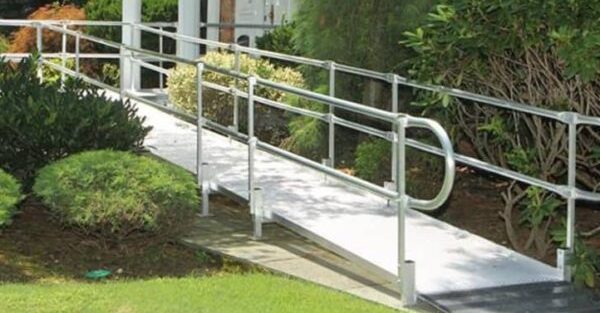
Many people see a ramp as a simple alternative to stairs. For us, it’s a precision tool. A ramp that is too steep is just as dangerous as a flight of stairs. Our design philosophy follows international accessibility standards, ensuring:
-
The Golden Ratio: We maintain a gentle gradient (1:12) that allows manual wheelchair users to navigate independently without exhaustion.
-
Non-Slip Surfaces: Given Nigeria’s rainy seasons, we use high-traction materials to prevent slips for those using crutches, walkers, or wheelchairs.
-
Dual-Level Handrails: We install rails at two heights to accommodate both adults and children, as well as those who need different grip points for balance.
2. Dignity in Privacy: Redefining Accessible Toilets
True inclusion means never having to ask for help with basic human needs. Our “Toilet-Accessible” initiative goes beyond putting a sign on a door. Our facilities feature:
-
Extra Turning Radius: Ample floor space for a 360-degree wheelchair turn.
-
Reinforced Grab Bars: Strategically placed bars that support weight-bearing transfers.
-
Low-Level Fixtures: Sinks, soap dispensers, and hand dryers are positioned at a height reachable for everyone, including those in a seated position.
3. The “Community Launch” Concept: Testing in Real-Time
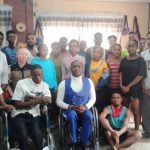
Innovation shouldn’t happen in a vacuum. Before we finalize any physical space, we engage in a Community Launch. We invite members of the disabled community, local advocates, and gifted creators to “stress-test” our designs.
-
Is the doorway wide enough for a motorized chair? * Are the signs high-contrast enough for someone with low vision? * Does the entertainment hall have acoustics that don’t overwhelm neurodivergent individuals? We listen, we learn, and then we refine.
4. Sensory-Friendly Training Environments
For the “gifted” side of our community—those who may be neurodivergent or have high sensory sensitivity—accessibility isn’t just physical. Our training hubs incorporate:
-
Controlled Lighting: Avoiding harsh flickers that can trigger migraines or sensory overload.
-
Quiet Zones: Dedicated spaces where consultants or students can retreat to focus during high-energy entertainment events.
Why This Matters for Nigeria
Accessibility is often viewed as a “luxury” or an “afterthought” in local construction. We are out to prove that inclusive design is actually better design for everyone. A ramp helps the person in a wheelchair, but it also helps the elderly person with joint pain and the delivery man with a heavy crate.
By building these spaces, we aren’t just providing a service; we are setting a new standard for what a modern, empathetic Nigerian company looks like.